Thursday, 11 September 2014

Wild Wisdom 2014 - Online Quiz

Wild Wisdom 2014 - Online Quiz


Registration Process      

http://support.wwfindia.org/wwq_online/login/register.php

All participants will need to register on this website(Click the link  above). After registration each participant will get a login with thier email id and a password to enter the online quiz.

When to register

Registrations open: August 04, 2014
Registrations close: October 07, 2014

Format of the Wild Wisdom 2014–Online Quiz

The quiz consists of 3 Levels. To participate in the quiz students will need to login with their email id and password provided. Once the stipulated time limit is over the quiz will be timed out.
Please note: Each participant can register ONLY ONCE. In case a participant attempts a second registration, WWF will forfeit their participation in the quiz. Please read Rules and Regulations for more details.

Level 1:

October 10, 2014 to October 12, 2012
Level 1 will have 30 questions to be completed within a time frame of 15 minutes. Once the stipulated time limit is over the quiz will be timed out.
A participant has to get at least 40% or 12 answers right in order to qualify for the next level. Successful participants will be intimated by an email at the address that they have registered from.

Level 2:

October 17, 2014 to October 19, 2012
Level 2 will have 40 questions to be completed within a time frame of 20 minutes. Once the stipulated time limit is over the quiz will be timed out.

A participant has to get at least 60% or 24 answers right in order to qualify for the next level. Successful participants will be intimated by an email at the address that they have registered from.

Level 3:

October 24, 2014 to October 26, 2012
Level 3 will have 60 questions to be completed within a time frame of 30 minutes. Once the stipulated time limit is over the quiz will be timed out.
The final winners will be selected on the basis of maximum number of correct answers, in case of a tie – a lucky draw will be held to select the final 12 winners.
Successful participants will be intimated by an email at the address that they have registered from. Their goody bags will be sent to the postal address provided during registration.

THEME – Forest Biodiversity

2011 to 2020 is the UN ‘Decade on Biodiversity’. Based on this, Wild Wisdom focusses on Forest Biodiversity, that refers to all life forms found in forests, including trees, plants, animals, fungi and micro-organisms, and their interactive roles in nature. Forests release oxygen, store carbon, protect the surface soil and fresh water sources, attract rainfall as well as provide a home to at least two-thirds of all terrestrial species. Moreover, besides their cultural and leisure value, they are an integral part of human life, providing fresh air, food, water, fuel and shelter to a large section of the earth’s population. The conversion of forests to agricultural land, and for developmental projects, as well as climate change is destroying forest biodiversity at an alarming rate. Therefore there is an urgent need to highlight the value and create awareness about the importance of Forest Biodiversity.

Wednesday, 13 August 2014

Wild Wisdom Quiz, 2014


Glimpses of last year's wild wisdom city levelconducted with the help of Greenline
Wild Wisdom, which started in 2008, is India’s only national wildlife Quiz; it is also Asia’s largest wildlife quiz. The objective of the quiz is to raise awareness about flora and fauna in India and inculcate a sense of pride amongst students about India’s rich natural heritage.

This year is the 7th edition of Wild Wisdom. It is an initiative by WWF-India in partnership with the Ministry of Environment, Forests & Climate Change and the Central Board of Secondary Education (CBSE), which recognizes the quiz as a Continuous and Comprehensive Evaluation (CCE) activity.

Glimpses of last year's wild wisdom city levelconducted with the help of Greenline
The quiz will be conducted in 30 cities in India, reaching out to more than 15,000 schools. The National Final (for the Middle School) will be held in New Delhi on the 1st of October during Wildlife Week. The top 3 teams will win a trip to Adventure Nation’s Camp Tusker near Rajaji National Park, in the Shivalik Hills. This prized experience will highlight ‘Forest Biodiversity’- the 2014 theme of the Wild Wisdom Quiz.

 The quiz will be conducted as follows:

Category
Standard
Quiz will be played at Levels
Junior School
Classes 3-5
School and City
Middle School
Classes 6-8
School, City and National
High school
Classes 9-12
Online Only


City Level Quiz: 18th Sept 2014
 Last Date to Register: 3rd Sept 2014
For more Details contact: 022-24701361 / 022- 24700039
E-mail: wwfmso@gmail.com
-
WWF India Maharashtra State Office Team

Glimpses of last year's wild wisdom city levelconducted with the help of Greenline

Thursday, 31 July 2014

Teachers' Training Workshop by WWF-India, MSO


A Teachers’ Training Workshop was conducted by WWF-India Maharashtra State Office on 25th July, 2014 at Maharashtra Nature Park Society (MNPS), Dharavi. 30 teachers from 20 different Educational Institutes across Mumbai and Thane participated in this workshop. The theme was “Eco and Ego.” The focus of the workshop was to sensitize teachers and ultimately students. The theme was based on how human ‘Ego’ alters the natural ecology and how we can think about sustainable development. This was well explained during the session taken by Anjana Devsthali. Year 2014 is observed as ‘International Year for Family Farming’. The details of the same were explained by Dr. N.S.Tekale. A short nature trail around MNPS was helpful for teachers to understand the biodiversity of the area. Wild Wisdom Quiz details were shared by intern during the session. We are thankful to all teachers for participating and our speakers for giving their valuable time and making the sessions interesting and informative. We are also thankful to MNPS for providing us the venue and other necessary support.


Here are some photographs of various activities conducted during workshop:

Inaugural address by Mr.Avinash Kubal


Wild Wisdom Quiz details explained by intern Kaushik Koli
Eco Vs Ego by Anjana Devsthali


Nature Trail
Teachers' Planning Environment education in schools
Sketch presentation for the plans
Group of Teachers' during presentation
Family Farming session by Dr.N.S. Tekale
Film screening


Wednesday, 30 July 2014

Nature trail to Sanjay Gandhi National Park -                           Manpada Gate

WWf-India,MSO had organized a nature trail to SGNP at Manpada gate. About 24 participants attend the trail. Here are some photographs of the trail. 
Kantoli Flowers

Lets learn from Nature 


Blue Bottle Butterfly
Great Eggfly-pic Meghana Oak
Blue Oak Leaf -pic Meghana Oak
Tailed Jay -pic Meghana Oak
Short horned Grasshopper
Dragon fly
Cleaning system for forest : Mushrooms
Common Silverline -pic Meghana Oak
 
Food for everyone

  
 Veiled Mushroom


Tuesday, 8 July 2014

Korigad Photographs

WWF-India conducted a nature trail at Korigad on 6th July, 2014. Sharing some pics from the trail.
starting the trail. Clicked by Gauri

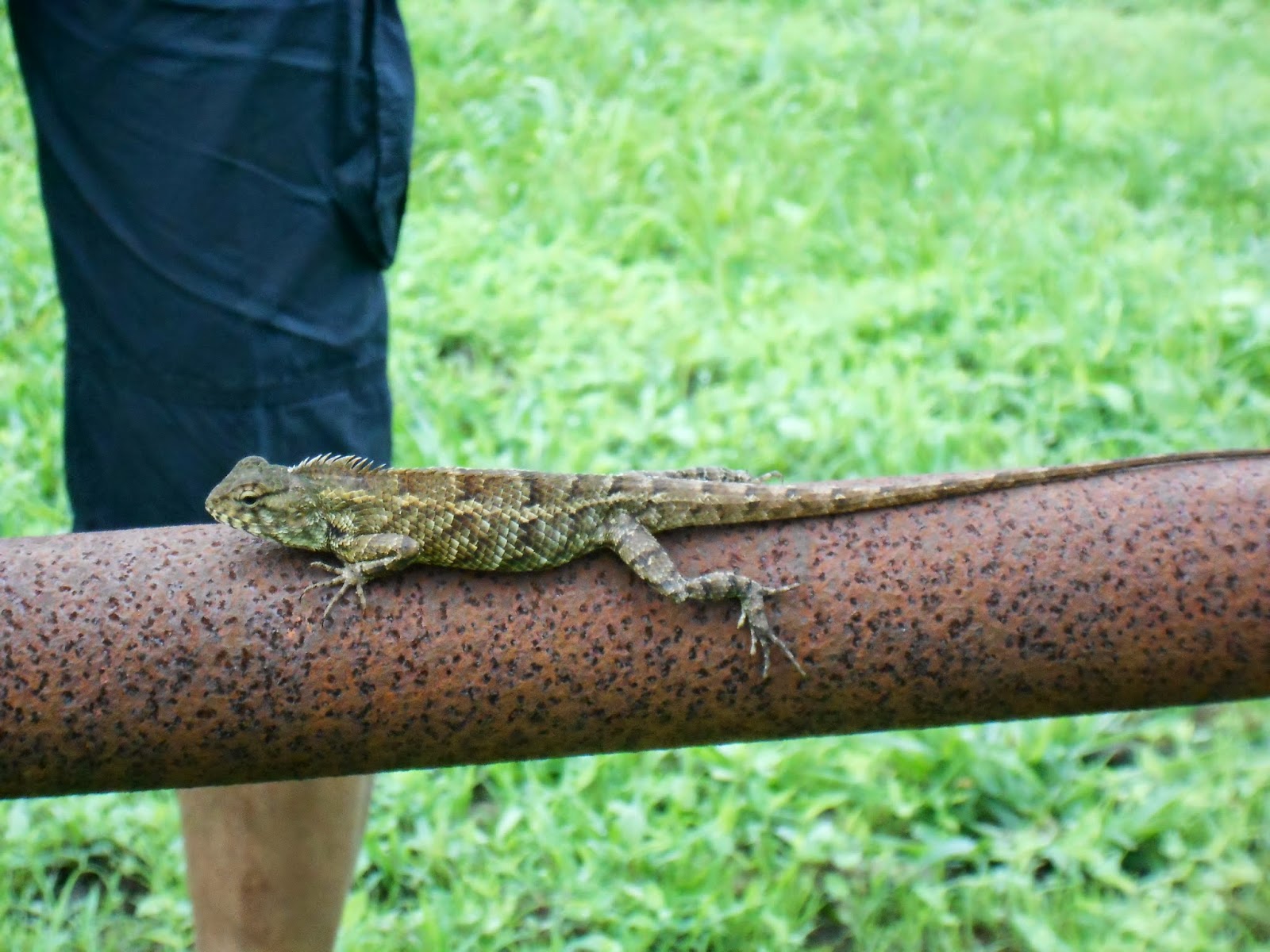
Garden lizard. Clicked by Dr. Shreya

Clicked by Gauri

Rana tigrina clicked by Dr. Shreya

Clicked by Shreya

On the Fort. Clicked by Gauri

View from the Fort. Clicked by Gauri

Friday, 4 July 2014

Suryamal Camp report


Group - Clicked by- Rupali
*For future programmes check our bloglink-   http://wwfmso.blogspot.in/2014/05/wwf-india-mso-programme-july-december.html
WWF-India Maharashtra State office conducted a nature camp to Suryamal and Amla Wildlife Sanctuary from 28 to 29 June, 2014. We were 12 in number.  Like of us, many other species overthere were prepared and anxiously waiting for rains. Farmers were ready, some of the monsoon ephimerals germinated and flowered as well. Only big factor missing was normal rains. But still, we got to see good amount of biodiversity. Here is the list:
Karvanda time for youngones: They are delicious. Clicked by Dr. Shreya

Karvanda time for even youngers. Clicked by Dr. Shreya
 A. FLORA 

Biodiversity study on a single tree. Clicked by Gauri
Ain flowering clicked by Mr. Bhaskar Paratey
Cobra lily clicked by Mr. Bhaskar Paratey
  1. Vad/Banyan Tree (Ficus benghalensis)
  2. Palas/Flame of the forest (Butea monosperma)
  3.  Amba/Mango tree (Mangifera india)
  4. Karanj/Pongam oil tree  (Pongamia pinnata)
  5. Katesavar/Red silk cotton tree (Bombax ceiba)
  6. Gulvel/Guduchi (Tinospora cordifolia)
  7. Sag/Teak (Tectona grandis)
  8. Bahava/ Indian Laburnum (Cassia fistula)
  9. Aaghada/Prickly chaff flower (Achyranthes aspera)
  10. Umber/Country fig tree (Ficus glomerata)
  11. Ghaneri/Red sage (Lantana camara)
  12. Jambhul/Java plum/Black plum (Syzygium cumini)
  13. Wild Karwand (Carissa spinarum)
  14. Moi, Shemat/Indian Ash tree (Lannea coromandelica)  
  15. Pimpal/Sacred fig tree (Ficus religiosa)
  16. Khair/Catechu tree (Acacia catechu)     
  17. Vavla/Indian Elm (Holoptelia integrifolia)
  18. Bor/Indian jujube (Ziziphus jujube)
  19. Tad/Palmyra fan (Borassus flabellifer)
  20. Mogli Erand (Jatropha curcas)
  21. Dinda/Bandikoot berry (Leea indica)    
  22. Motha dinda (Leea macrophylla)
  23. Kala kuda/Sweet indrajao (Wrightia tinctoria)
  24. Pandara kuda/Tellicherry bark (Holarrhena antydysentrica)
  25. Anantmul/Indian sarsaparilla (Hemidesmus indicus)
  26. Ain/Laurel (Terminalia crenulata)        
  27. Garuga/Kakad (Garuga pinnata)
  28. Takla/Wild senna (Cassia tora)
  29. Jangali draksha/Wild grapes (Ampelocissus latifolia)
  30. Kadu karanda/Aerial yam (Dioscorea bulbifera)
  31. Shivan/White teak (Gmelina arborea)
  32. Keni/Whiskered commelina(Commelina benghalensis)
  33. Haldu (Haldina cordifolia)
  34. Shisham/Indian rosewood(Dalbergia sissoo)
  35. Asana/Spinous kino tree(Bridelia retusa)
  36. Kharoti/Sand paper tree(Streblus asper)
  37. Kumbha/wild guava(Careya arborea)
  38. Alu(Meyna laxiflora)
  39. Pandhra sap-kanda/Cobra lily(Arisaema murrayi)
  40. Nagdamni/Crinum lily(Crinum viviparum)
  41. Kali musli/Golden eye grass(Curculigo orchioides)
  42. Kahandol(Sterculia urens)
  43. Moha/Indian butter tree(Madhuca longifolia)
B. FAUNA

A. Insects

a) Butterflies

clicked by Mr. Thiruvengadam
  1. Common Emigrant
  2. Spot Sword tail
  3. Lime Butterfly
  4. Rounded pierrot
  5. Common Leopard
  6. Common crow
  7. Danaied eggfly
  8. Grass yellow
  9. Plum judy
clicked by Mr. Thiruvengadam
b) Other insects

  1. Spotted bettle
  2. Fire flies
  3. Dragon Fly
  4. Damsel Fly
  5. Praying Mantis
  6. Short horned grasshopper
  7. Cicada
  8. Crematogaster ants
  9. Fire ants
  10. Bark Mantis
Clicked by Mr. Shripad


Spotted beetle clicked by Mr. Shripad


B. Birds:

clicked by Mr. Thiruvengadam
  1. Palm Swift
  2. Drongo cuckoo
    Drongo cuckoo clicked by Mr. Bhaskar Paratey
  3. White Wagtail
  4. Crested serpent eagle
  5. Greater coucal
  6. House crow
  7. Jungle crow
  8. Cattle egret
  9. Cormorant
  10. Purple rumped Sunbird
  11. Flowerpecker
  12. Golden fronted leaf bird
  13. Tailor bird
  14. Large Green Barbet
  15. Oriental white eye
  16. Jungle Babbler
  17. Red vented bulbul
  18. Black Kite
  19. Common myna
  20. Rufous Woodpecker
  21. Green bee-eater
  22. Rufous tailed shrike
  23. Oriental Magpie robin
  24. Black hooded oriole
  25. Large hawk cuckoo


 C. Reptiles

Calotes Clicked by Mr. Bhaskar
  1. Banded gecko
  2. Calotes
D. Amphibian

  1. Indian bullfrog
E. Spiders:

  1. Tarantula
  2. Hunt’s man 
clicked by Mr. Thiruvengadam


clicked by Mr. Thiruvengadam


clicked by Mr. Thiruvengadam